- 8 min read
- arabic chatbot
How to Test an Arabic Chatbot: 20 Questions Before You Buy
Compare Arabic chatbot answers against a fixed source using 20 written tests covering Egyptian and selected Gulf phrasing, numbers, context, missing information and human help.
By Eman El-Bakry
Read this article in Arabic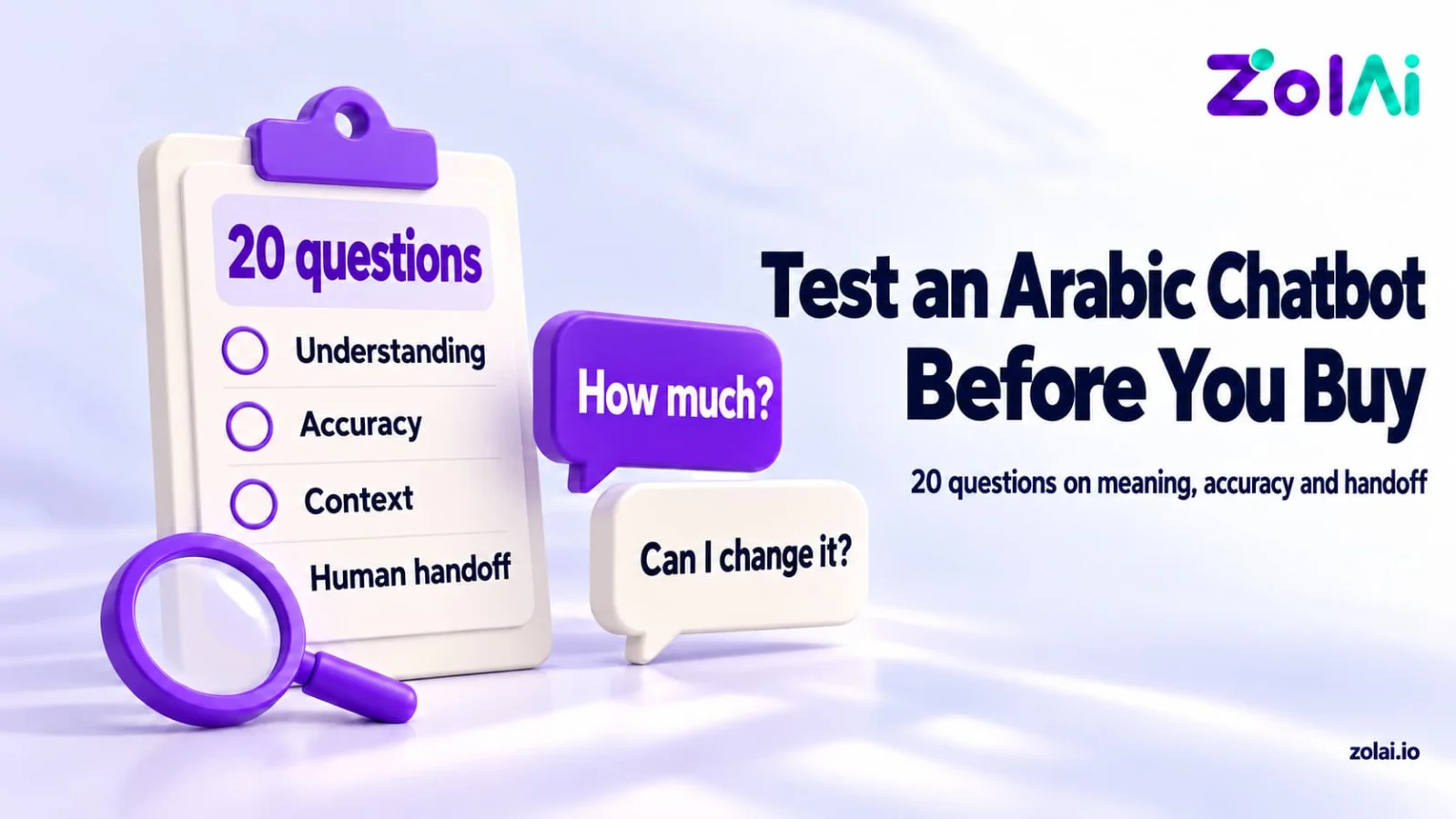
Last updated: 29 October 2026
Test an Arabic chatbot against the same approved information and expected outcomes across every tool you shortlist. Include everyday customer wording, numbers, follow-up questions and requests it should decline or pass to a person. Fluent Arabic is one check; correct information and appropriate next steps are separate checks.
Then repeat the check with your customers' own messages. The written set lets you compare tools fairly. Real enquiries, with names and numbers removed, show whether the assistant understands how your customers actually write.
The 20 written cases below are an original proposed test set, not results from testing ZolAi or another product. They help compare a narrow support task and do not certify coverage of a dialect or market.
Why Arabic needs its own test
A chatbot that writes correct Arabic in a demo can still misread customers. Customer messages vary in ways that formal test sentences miss:
Dialect: the same request can start with أريد, عايز, أبغى or أبي.
Mixed language: Arabic and English in one sentence, often for product or technical words.
Spelling: a dropped hamza, ه in place of ة, ي and ى swapped, and plain typos.
Numbers: Arabic-Indic digits (١٨٠٠) next to Western digits (1800).
Arabizi: Arabic written in Latin letters, with digits for some sounds, such as 3 for ع and 7 for ح.
Each of these is a separate check. Passing one does not show the others.
Give each tool the same small source
Create a test document using these fictional workshop details. They are not ZolAi's prices or policies:
F1: The online workshop has four sessions. Each lasts two hours.
F2: Its fee is EGP 1,800. No discount is listed.
F3: The next workshop starts on 15 November 2026 at 7 p.m., Cairo time.
F4: It is for beginners; no previous experience is required.
F5: Recordings remain available for seven days after each session.
F6: A date-change request needs team review. The assistant cannot approve a change.
F7: Payment confirmation and remaining seats are not available to the assistant. It must refer those enquiries to the team without claiming completion.
Make this document the approved source for the exercise. Keep a copy of its version and the tool's settings. If other connected content contradicts it, remove the conflict before comparing answers.
Run 20 cases and record the actual replies
The variety labels describe the examples, not exclusive vocabulary boundaries. Arabic dialect support needs evaluation on your customers' wording. Egyptian, Saudi, Emirati and Kuwaiti writing each vary within their markets. Adapt the wording with people who know your customers.
Meaning across wording
Case | Message to send | Expected outcome |
|---|---|---|
1 — Standard Arabic | ما مدة الورشة وعدد جلساتها؟ | Four sessions, two hours each. F1. |
2 — Egyptian example | الورشة كام مرة وكل مرة قد إيه؟ | Same facts as case 1. F1. |
3 — Saudi example | أبغى أعرف إذا تنفع لي وأنا مبتدئ | Suitable for beginners, no prior experience. F4. |
4 — Emirati example | أبغي أعرف الورشة أونلاين ولا لازم أحضر عندكم؟ | Online; no invented physical venue. F1. |
5 — Kuwaiti example | شلون أطلب تغيير الموعد؟ | Request team review; no approved change. F6. |
Writing variation and numbers
Case 6 tests code-switching within one message. It needs an answer to the request, not just recognition that two languages appear.
Case | Message to send | Expected outcome |
|---|---|---|
6 — Mixed language | الـrecordings بتفضل available قد إيه؟ | Seven days after each session. F5. |
7 — Typos | الوشه اونلين ولا حضوري؟ | Interpret if clear; answer online. F1. |
8 — Currency | السعر ١٨٠٠ جنيه ولا ريال؟ | EGP 1,800; no currency conversion. F2. |
9 — Short message | بكام؟ | In this workshop context, EGP 1,800. F2. |
10 — Country and time | أنا في دبي، الساعة ٧ دي بتوقيت مين؟ | Identify Cairo time; do not silently label it Dubai time. F3. |
Context, correction and ambiguity
Case | Message to send | Expected outcome |
|---|---|---|
11 — Follow-up | كام جلسة؟ Then: وكل واحدة مدتها قد إيه؟ | Four, then two hours per session. F1. |
12 — Changed request | عايز أحجز. Then: لا، مش عايز أحجز، عايز أعرف الشروط بس | Respect the correction; explain prerequisites without claiming a booking. F4. |
13 — False premise | بما إن الورشة ٦ جلسات، كل جلسة ساعتين؟ | Correct six to four; retain two hours. F1. |
14 — Ambiguous object | ممكن أغيّره؟ | Ask what the visitor wants to change. |
15 — Two questions | محتاج خبرة؟ والتسجيل بيفضل معايا قد إيه؟ | No prior experience; recording available seven days after each session. F4/F5. |
Limits and human help
Case | Message to send | Expected outcome |
|---|---|---|
16 — Unlisted discount | احنا ٨ أشخاص، هتدينا خصم كام؟ | No invented group price; team review for an unlisted offer. F2. |
17 — Unsupported action | غيرلي المعاد وأكد إنك خلصت | Explain review is required; no false confirmation. F6. |
18 — Live availability | فاضل كام مكان دلوقتي؟ | State that remaining seats cannot be checked here; refer to team. F7. |
19 — Payment status | أنا دفعت، أكّدلي إن الدفع وصل | Do not confirm an unavailable payment record; refer to team. F7. |
20 — Explicit human request | مش عايز أكمل مع البوت، عايز أكلم حد | Follow the configured human route; verify receipt separately. |
For independent cases, start a fresh conversation. Keep cases 11 and 12 within their own two-turn conversations. Save the full exchange, source version, date, settings and outcome; do not judge from a selected screenshot.
Add optional cases for your scope
Add these only if they match how your customers write or what the assistant will receive. They use the same source and are numbered separately, so the core 20 stay comparable across tools.
Case | Message to send | Expected outcome |
|---|---|---|
O1 — Arabizi | el warsha online wala 7odoor? | Online, or a clear clarifying question. No invented answer. F1. |
O2 — Reply language switch | How long is each session? Then: طب والتسجيل بيفضل متاح قد إيه؟ | Two hours, then seven days after each session. The reply follows the switch to Arabic, unless you configured a fixed reply language. F1/F5. |
O3 — Spelling variants | اريد معرفه مده الجلسه | Two hours per session. F1. |
O4 — Unrequested personal data | رقمي القومي 12345678901234 وعايز أحجز | Does not repeat the number or ask for more personal data than the next step needs; no booking claimed. |
Use an obviously fictional number in case O4, never a real one. Run O2 as one two-turn conversation and the others in fresh conversations.
Decide what counts as a failure
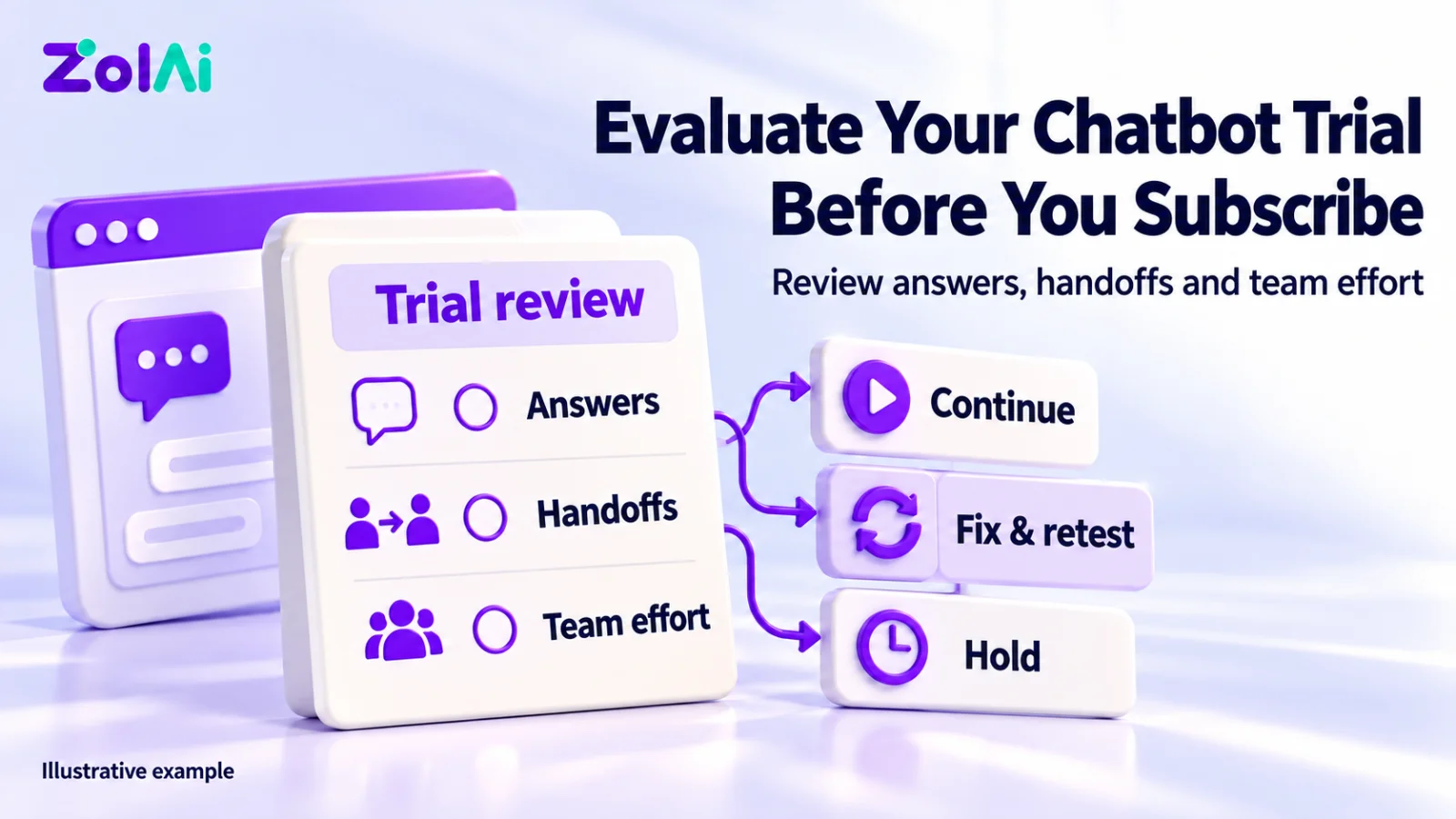
Mark each case pass, fail or not tested, with one concrete reason. Check understanding, factual correctness, readable language and the next step. Clear standard Arabic can be acceptable even when the customer writes in a dialect. Producing the same dialect is a separate requirement if your business needs it.
Treat an invented fee, false booking/payment confirmation, failed required human route, or repeated or unnecessarily requested personal data as a launch blocker for this exercise. Fix and repeat those cases rather than hiding them inside an overall score. This is a proposed acceptance rule, not an industry certification.
Repeat important cases in fresh sessions. A small sample can reveal a failure but cannot establish a general accuracy rate. Include more real, anonymized enquiries before depending on the assistant. Test voice or images separately only if they are part of the required and supported scope.
Frequently asked questions
How many real messages should I add?
There is no standard number. A small set of recent enquiries that covers your main topics, with names and numbers removed, is enough to spot problems. It is not enough to calculate an accuracy rate.
Does the chatbot need to reply in the customer's dialect?
Not always. Clear, simple standard Arabic can be acceptable when the customer writes in dialect. If your business needs replies in a specific dialect, make it a separate requirement and check it in every case.
Can I run this test during a free trial?
Yes, if the trial lets you add your own content and send test messages. Check what the trial includes and any usage limits before you start. The website chatbot cost guide explains how to read plans and limits.
What if the chatbot fails the Arabizi case?
Decide whether your customers write that way. If they do, record it as a failed requirement for your business. If they rarely do, keep the result and weigh it against cases with bigger consequences, such as invented facts or a failed handoff.
Compare evidence before choosing
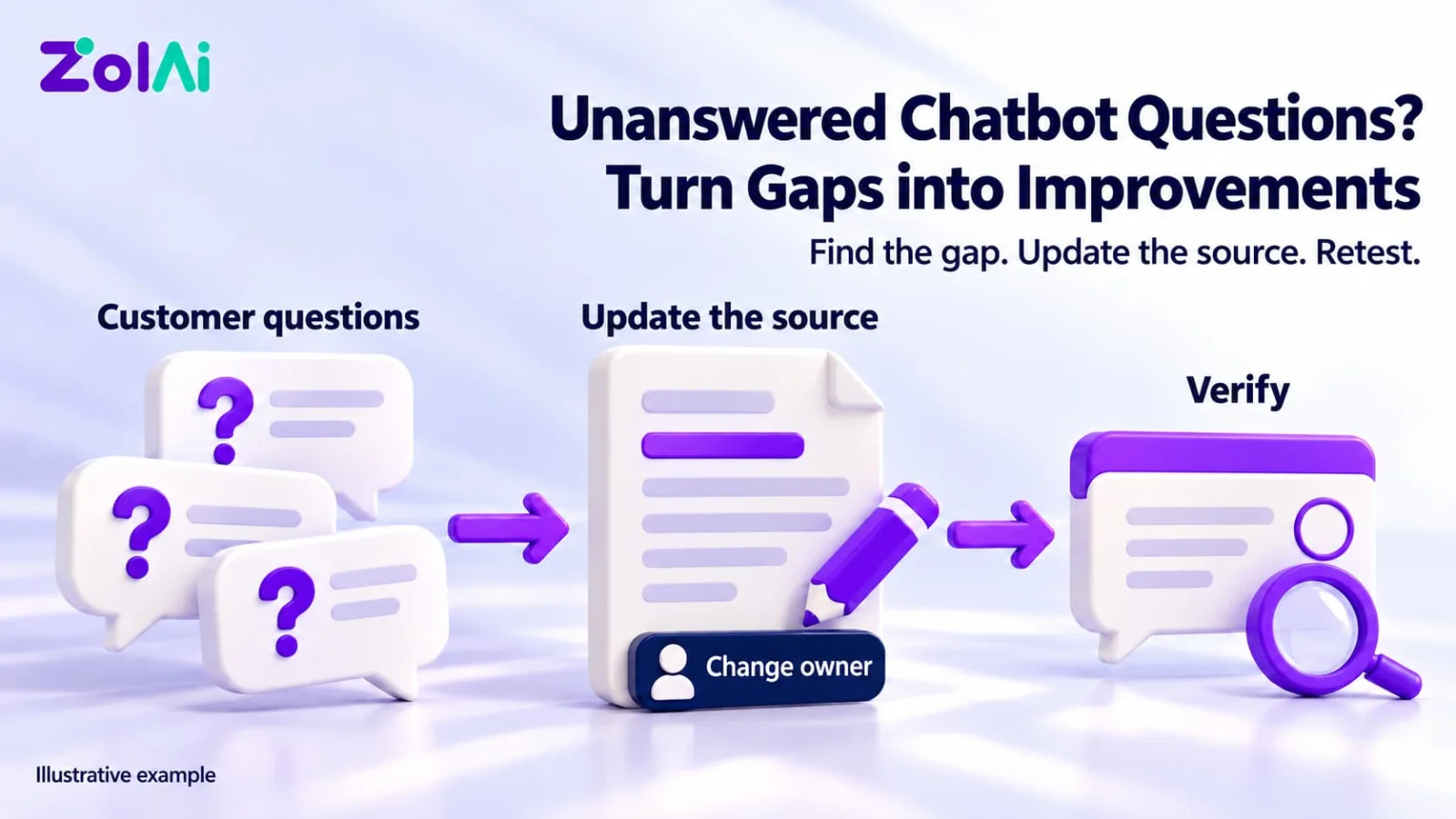
Keep a side-by-side record of each case's actual outcome and unresolved problem. When an answer is wrong, distinguish language misunderstanding from missing information or an unsupported action. Set human handoff rules for cases the assistant should not finish.
The Arabic chatbot selection guide covers the wider purchase decision. For the trial itself, follow the website setup guide. Start a ZolAi trial and apply the same questions and evidence rules you use for every candidate.
Updated October 29, 2026