- 5 min read
- chatbot trial
How to Evaluate a Website Chatbot Trial
Define a task, inspect answers and human follow-up, and review the evidence before deciding whether to subscribe, retest or hold the purchase.
By Eman El-Bakry
Read this article in Arabic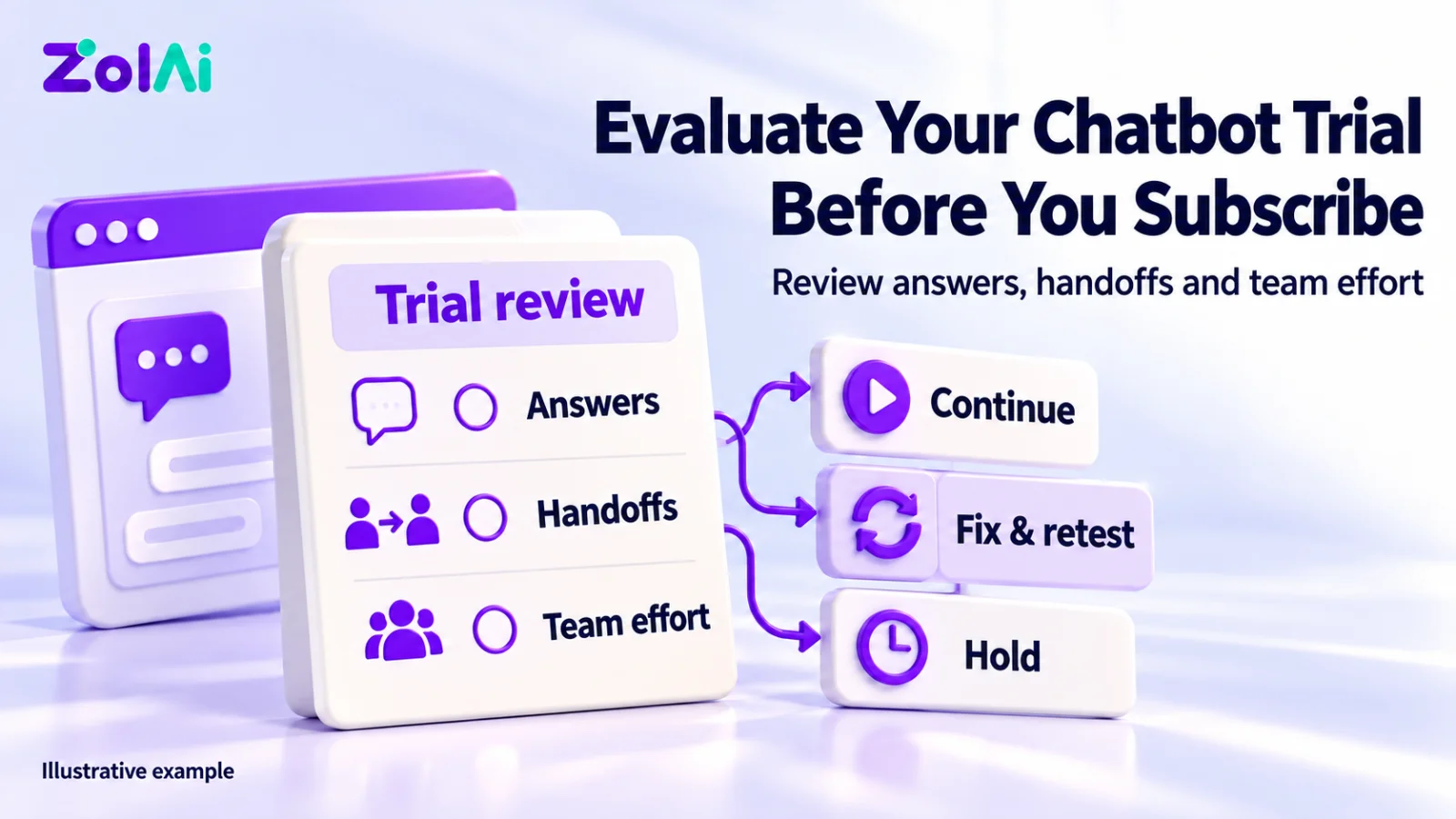
Evaluate a website chatbot trial against a task you need it to perform, the evidence it produces and the work your team still has to do. Decide whether to continue with that scope, fix a specific problem and retest, or hold the purchase because the evidence is insufficient.
A fluent demo answer is useful evidence about that answer. It does not establish how the assistant will handle your customers, your sources or your team's follow-up.
Write the decision before starting the trial
Choose one initial job, such as explaining a service's requirements. State what the assistant should answer, what must go to a person and who will review the results. Avoid starting with “handle all support”.
Create a short decision record:
Task and language · approved source · intended outcome · failures that block rollout · reviewer · review date
Add the benefit you want to assess: helping visitors find a correct answer, collecting an enquiry your team can follow up, or reducing repeated manual explanation. Pick evidence that matches that benefit. A contact form submission does not establish a sale, and a fast first reply does not establish a resolved request.
For an existing workflow, record the current effort or customer difficulty on comparable requests before changing it. If you have no baseline, the trial can still reveal whether a task works; describe any time-saving claim as unverified.
Check the complete route, then observe limited use
Start with internal tests against your approved content. Include routine questions, missing information and a request for a person. The Arabic chatbot test set supplies written cases for the language part; it is not a substitute for your own requests.
Inspect what happens after the reply. If the assistant promises to pass a request to staff, check whether the right person actually receives enough information to continue. Use the human handoff guide for that operating detail.
Only consider a supervised customer pilot after these checks pass, with a defined scope and someone able to respond. If you cannot observe real use during the trial, label the result as internal testing. Do not present rehearsed conversations as customer outcomes.
Keep test conversations separate from live ones. Record relevant changes to sources or settings so a successful result after a fix is not confused with the original version.
Review evidence instead of a single dashboard score
Use this review table. Your criteria should fit the task and the consequences of a mistake; the table sets no universal pass percentage.
Question | Evidence to retain | What it tells you |
|---|---|---|
Was the answer useful and supported? | Actual reply, approved source and reviewer note | Whether the requested information was delivered correctly |
Did human follow-up work? | Receiving-side record and the next useful reply | Whether responsibility reached someone who could act |
What effort remained? | Setup, content maintenance, review and handling time | Whether the workflow is practical for your team |
What remains uncertain? | Missing cases, unclear outcomes and low-volume topics | What the trial has not established |
Ask what each dashboard label means. For example, Intercom's resolution definition includes both customer-confirmed and assumed resolutions. For your own decision, distinguish an observed successful outcome from a conversation whose outcome you cannot establish.
Report counts with any percentage, along with the reviewed period and sample selection. Keep languages and materially different tasks separate. A strong result on English service FAQs cannot establish that Arabic exceptions or account-specific requests work.
Review a manageable set of full conversations, including failures and unclear endings. Where you can identify repeat contact about the same issue, include it in your assessment. An abandoned conversation should not become a verified success merely because nobody requested more help.
Choose a next step supported by the record
Consider this fictional review, not ZolAi results: among 12 reviewed conversations, eight have verified useful answers, two reach the intended employee, one contains an unsupported promise and one has an unclear outcome.
Do not combine those categories into a claimed accuracy rate. Check the acceptance rules: the handoffs may be intended successes, the unclear case remains unknown, and the unsupported promise needs investigation before expanding that task.
Choose one of these next steps:
Continue with the verified scope: the required route works, blocking issues are addressed and the remaining workload is acceptable.
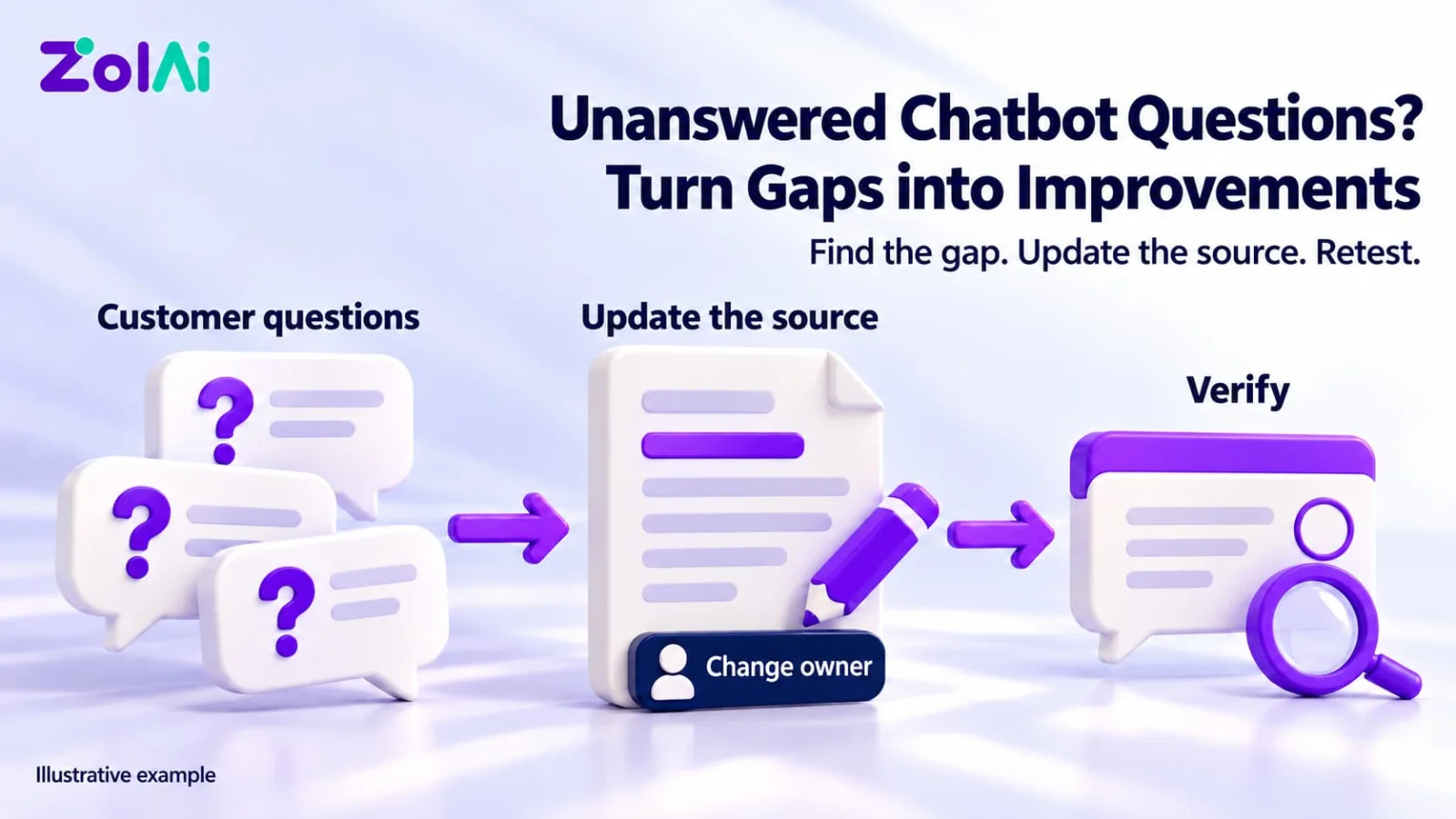
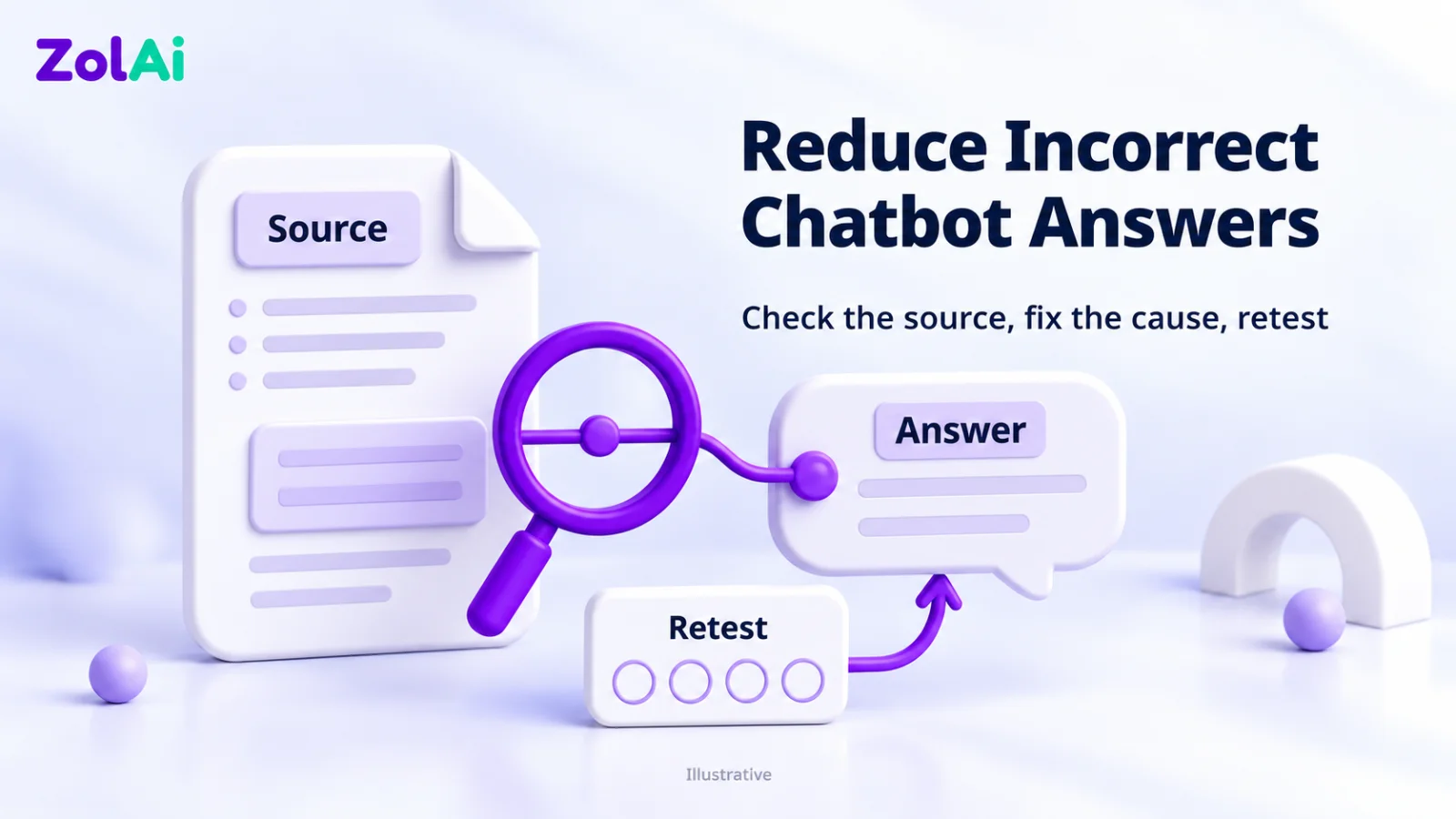
Fix and retest: a specific source or workflow problem is repairable; name the owner and the cases that must pass again.
Hold or decline: a required capability is unavailable, the workload is unsuitable, or there is too little evidence to justify the purchase. Record which reason applies.
Before paying, check the proposed paid plan's features, limits and operating cost using the website chatbot cost guide. A trial's access does not establish the terms of a paid plan.
Start ZolAi's 14-day trial without a card with this decision record. The trial length is an access window, not a guarantee that every business will collect enough evidence within it.