- 4 min read
- chatbot improvement
How to Turn Unanswered Chatbot Questions into Improvements
Review unanswered chatbot questions, group recurring requests and turn knowledge gaps into owned changes with a clear verification step.
By Eman El-Bakry
Read this article in Arabic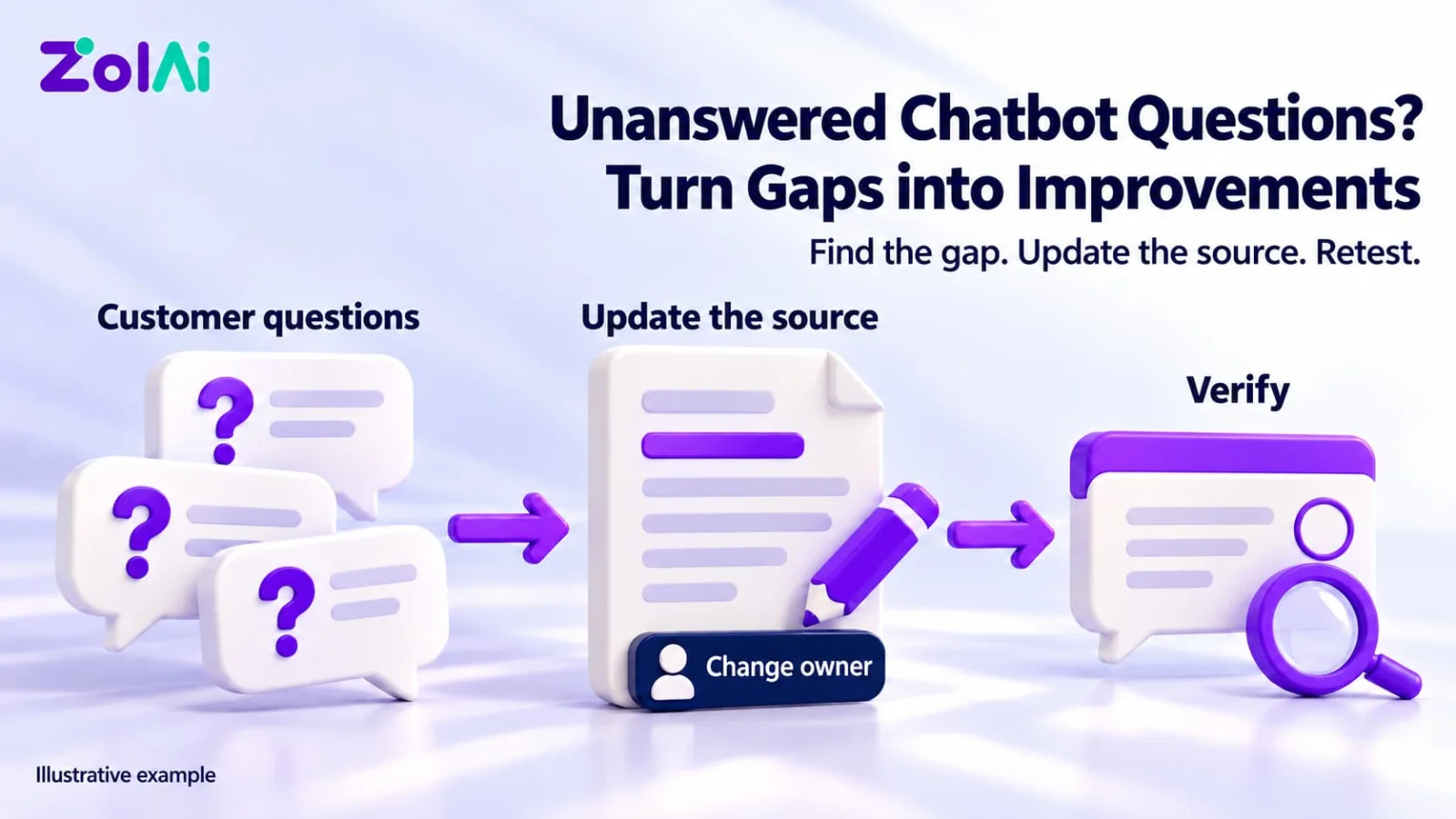
Review unanswered chatbot questions by grouping the requests behind them, deciding which gaps need content and which need a person, and assigning each change to an owner. Close a gap only after checking that the revised source supports the expected answer.
A list of unanswered questions is a starting point. Your useful output is a small, prioritised set of changes with evidence that each one helped.
Build the review around requests, not isolated messages
Choose a review period and record how the sample was selected. A weekly review can be a practical starting rhythm for a small team; adjust it to conversation volume and the impact of unresolved requests.
Include explicit “I don't know” replies, unanswered parts of a request and questions a customer repeats after an unhelpful answer. Read the surrounding conversation before labelling something a knowledge gap. A handoff requested by the customer may be working exactly as intended.
Group equivalent requests while keeping conditions that change the answer. “Can I join from my phone?” and “Does the course work on mobile?” may belong together. “Can I join without an account?” needs a separate decision.
Count each request once per conversation for your review, rather than counting every repeated message as a new gap. Keep a reference to the original exchange, but remove unnecessary names, contact details and account information from shared working notes.
Decide what should happen to each group
Give each group a proposed next step:
Approved information is missing: ask its owner to supply an answer and its conditions.
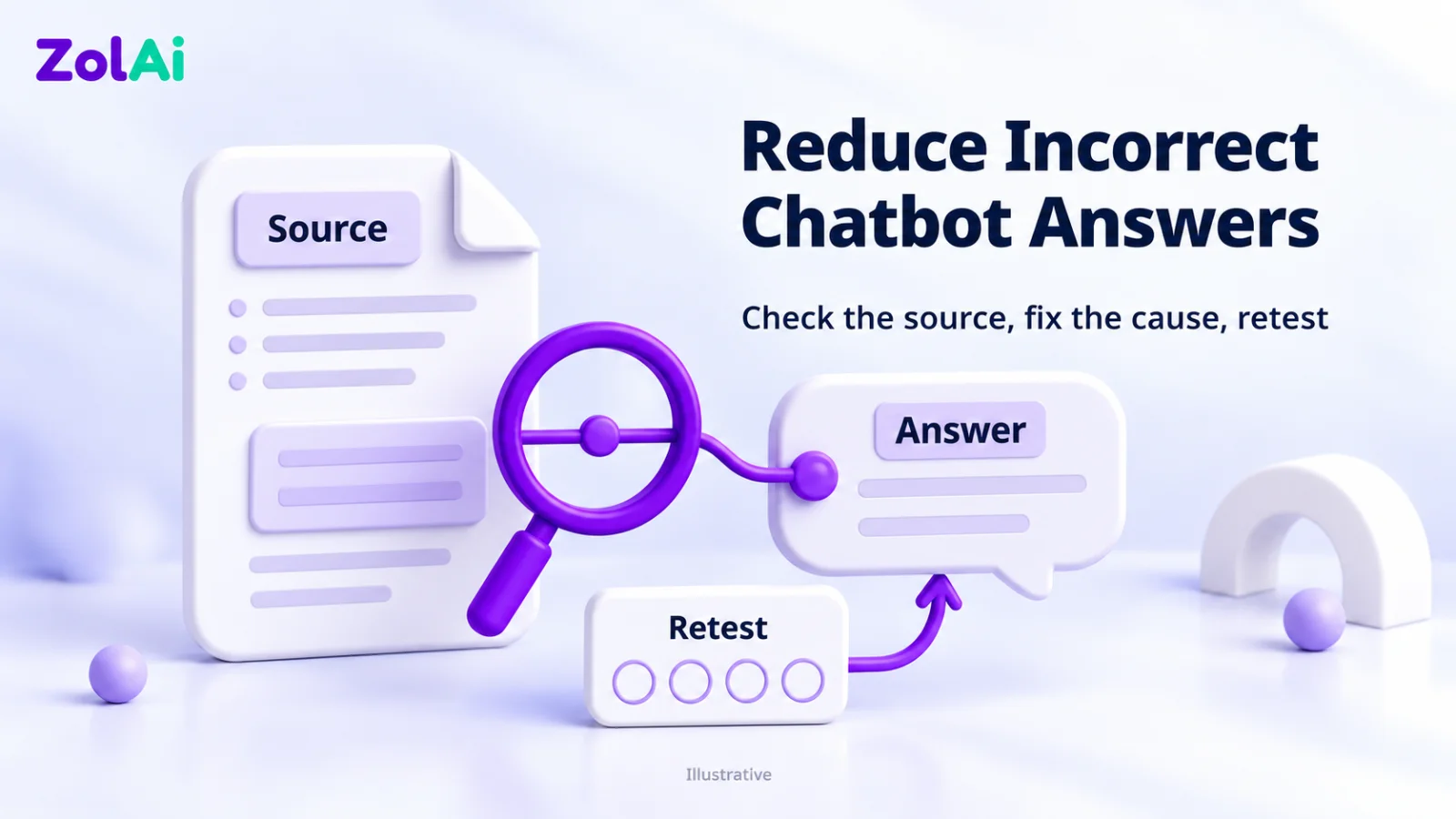
Information exists but the answer still fails: send a representative case through the incorrect-answer diagnostic guide. Adding another copy may not fix the cause.
The request needs clarification: identify what the assistant must ask before it can answer.
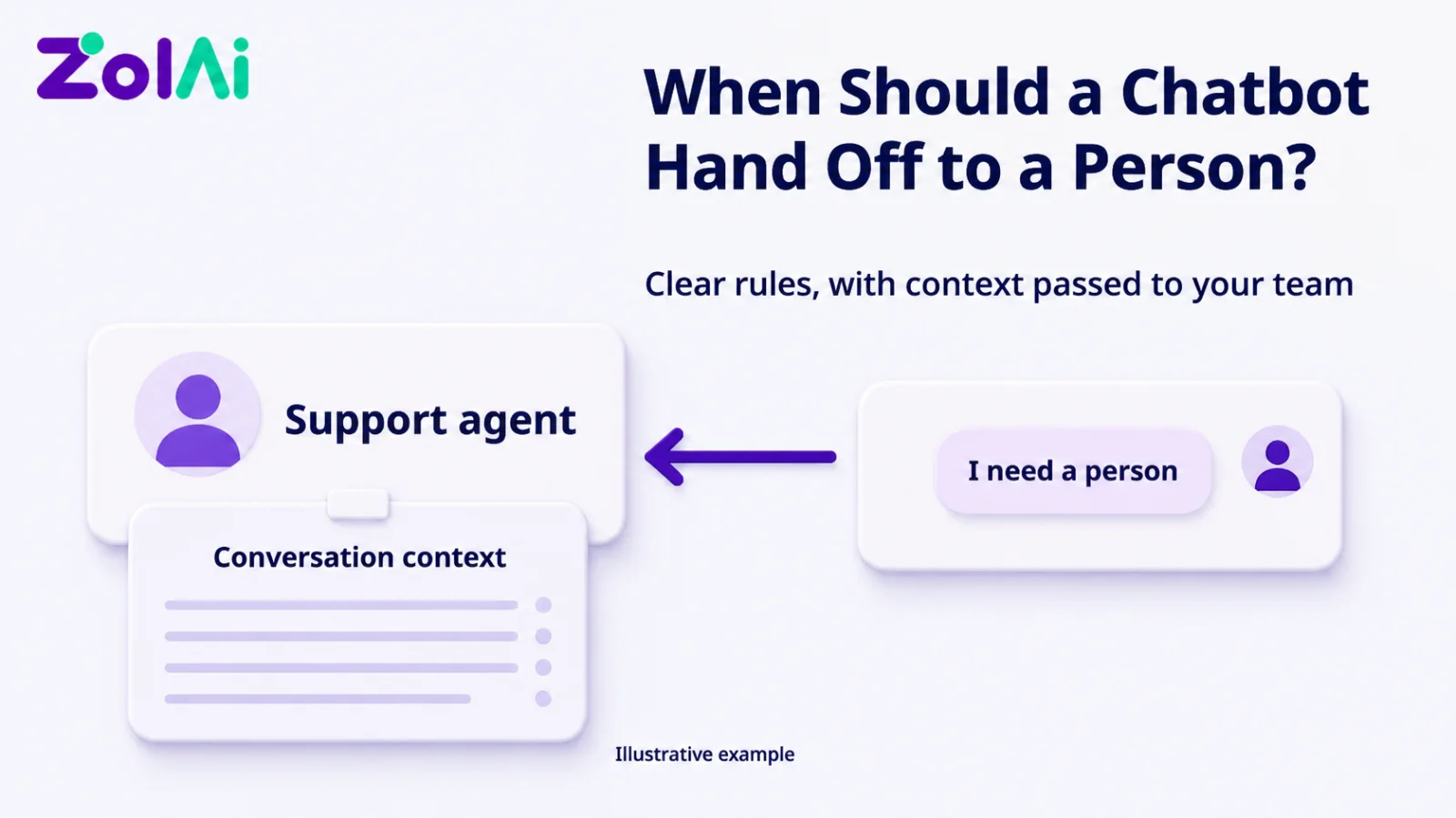
The request needs authority or private records: keep a human route instead of writing a general answer that pretends to resolve an individual case.
An agent's successful reply can help you find missing knowledge, but do not promote it directly into a policy. It may describe a one-off exception or depend on information the chatbot cannot access.
Turn the highest-priority gap into an owned change
Frequency matters, but impact can outweigh it. A misleading fee or an unsupported commitment deserves attention even if it appeared once. Among routine gaps, start with recurring requests that prevent customers from understanding or using your service.
Use this record for each selected change:
Request group · review period and count · representative conversation · intended outcome · approved source · owner · next review date · test result
Keep the list short enough for someone to act on. Assign one person to obtain the approved information and another to check it if your process needs that separation. A task such as “improve the bot” has no clear finish; “add the approved mobile-access requirements to the course page and verify the answer” does.
Example: a missing course-access requirement
This is a fictional example, not a ZolAi test. Three conversations ask whether a course works on a phone. The course owner confirms that recorded lessons work in a mobile browser, but one practical exercise requires a computer.
The change is to add both facts to the course requirements. Test the original phone question, a differently worded version and “Can I complete every exercise on my phone?” The expected answer must preserve the computer requirement.
Do not turn a separate request for a personal deadline extension into a general promise. Record who handles that request and leave its outcome with the authorised person.
Update the source, then check the outcome
Follow the knowledge preparation guide when adding the approved information. Update the source that should govern the answer instead of leaving conflicting versions in place.
For ZolAi catalogs, a manually uploaded file needs updating and reuploading; a linked source needs refetching. Do not assume that a source edit has already reached the assistant or that every conversation automatically teaches it a new answer.
Keep a change pending verification until the affected questions produce the expected response. Save the source version, test date and actual reply. Then review later conversations from the same group to see whether the difficulty returns.
If you track an unanswered-request rate, divide affected requests by all reviewed requests in that group, using the same counting rule and comparable periods. Report the counts alongside the rate. Fewer questions alone cannot tell you whether customers found an answer, left or moved to another channel.
Try ZolAi for 14 days without a card with one approved topic. Use the same review record to evaluate what it answers and which requests still need your team.