- 7 min read
- arabic chatbot
How to Choose an Arabic Chatbot for Your Website
Compare Arabic website chatbots using your customer questions, approved sources, update needs and human handoff. Use a practical checklist to decide what to trial and what to rule out.
By Eman El-Bakry
Read this article in Arabic
To choose an Arabic chatbot for your website, define the customer questions it should handle, the information it needs and when the conversation needs a human handoff. Then evaluate shortlisted tools using the same questions and approved sources. Look for evidence of Arabic comprehension, correct answers, manageable knowledge updates, human handoff and a clear usage bill.
Start with requirements you cannot work without. If WhatsApp is essential, a website-only tool does not meet that requirement, however convincing its demo looks.
Define the job on your website
Write a specific brief: “Answer questions about our courses using published information, and pass exception requests to our team.”
That is a different job from “Find a customer's current order status and cancel the order during the conversation.” The first needs access to approved content. The second also needs a connection to the system holding the order, plus permission to perform the action. Uploading a product catalogue does not demonstrate that connection.
If you have not decided how automation and your team should share the work, compare live chat and AI chatbots first.
Before comparing platforms, record:
Channel: Website chat, or another channel that must work now?
Information: Policies and files, or prices, availability and customer records that change frequently?
Authority: What can the assistant explain, and what requires a person's approval?
Owner: Who will update information, review answers and follow up on conversations?
If a clear page or saved replies can handle your small set of questions, improve those first. A chatbot needs a defined job and someone to maintain it.
Compare requirements against evidence
Use this table with every shortlisted tool. Decide which requirements are essential for your business; you do not need every available feature.
Requirement | What to check | What you need to establish |
|---|---|---|
Channel | Open a conversation on the required channel using the intended plan | Does it work now, or need a separate add-on or setup? |
Answer source | Ask a question with a documented answer, then one the source does not cover | Does it preserve the information and seek clarification or help when needed? |
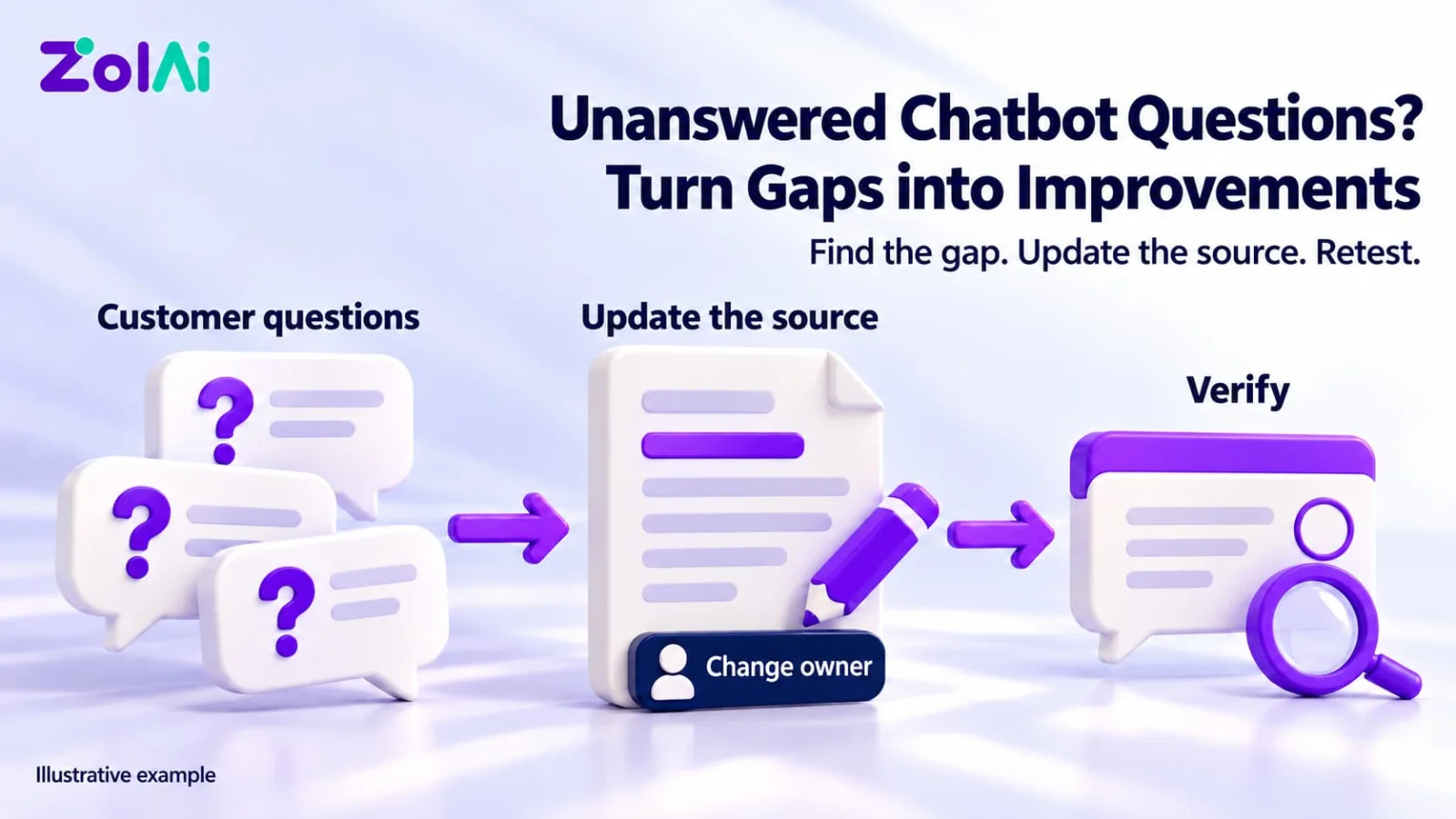
Knowledge updates | Change a test detail, run the stated update process and ask again | Who performs the update, and when does the new information appear? |
Arabic and mobile display | Use customer messages and open the chat on a phone | Does it understand the request and display numbers, links and text direction clearly? |
Human takeover | Request a person and inspect both the visitor and team experience | Where does the conversation arrive, what context is available and what happens after hours? |
Check installation access and try updating the content | Can your team operate it, or will it need ongoing technical help? | |
Request the billing unit, plan limits, overage charges and seat allowances | Can you estimate your bill, and what happens when you reach a limit? | |
Customer data | Review access, retention, deletion and processing-location documentation | Does it fit your business requirements, and what needs clarification? |
Separate Arabic fluency from a correct answer
A natural reply can still contain the wrong price or promise an exception your policy does not allow. Review comprehension, factual correctness and presentation separately.
For example, “ينفع أغيّر الميعاد؟” asks whether a date or appointment can be changed. Does the tool understand the request? Does it explain the relevant policy, or claim it has changed something without completing an action?
Use Egyptian or Gulf expressions your customers actually write. Include mixed Arabic and English when relevant. Check the conversation on mobile, particularly amounts, phone numbers and links. Good formal Arabic alone does not settle those questions.
For a closer language evaluation, use the guide to testing an Arabic chatbot with Egyptian and Gulf customer messages.
Find out how changed information reaches the answer
Ask the vendor: “If we change a price or remove a service, what must happen before the answer changes?”
The process may involve replacing a file, fetching a page again or connecting to a changing data source. Ask the vendor to demonstrate the method available on your intended plan. A website URL in the source list does not, by itself, establish that every change appears immediately.
Assign someone to own the update. A process suitable for an occasional policy change may be unsuitable for information that changes several times a day.
Two businesses, two different buying decisions
The following scenarios are hypothetical examples, not customer stories or test results.
A training provider answering course questions
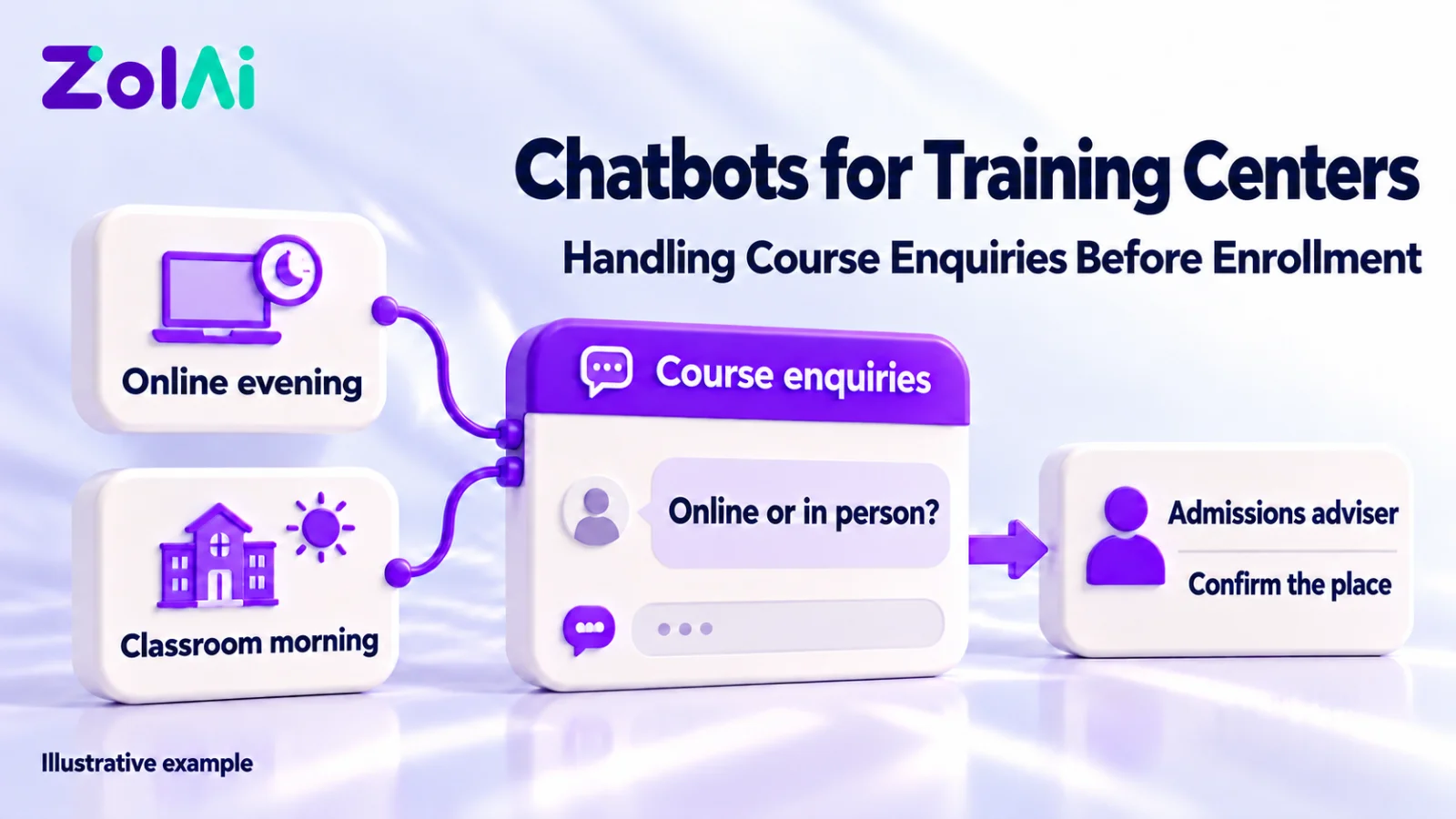
The provider has approved information about course content, dates, fees and entry requirements. A staff member handles exceptions. A visitor asks about eligibility, then asks whether they can join after the first session.
A sensible trial candidate can answer from the provider's information and let the team take over. The evaluation should establish that it explains the requirements, leaves the exception decision to a person and allows the content owner to update a changed date or fee.
This scope does not require automatic seat reservations or payment collection. If those become necessary, add them as separate requirements and verify them.
An online store needing WhatsApp and live order access
The store needs replies on WhatsApp, current information about each customer's order, and the ability to cancel an order or issue a refund.
Reading product descriptions and a returns policy does not establish those capabilities. The store needs proof of the channel, access to the correct order, customer identity checks where required, and the permissions and limits governing each action.
A catalogue-only tool might help with product questions while leaving this larger task unmet. Rule it out for that scope, or narrow the trial to the job it can actually perform.
Keep an evidence record before you decide
For each tool, record the requirement, whether it is essential, the evidence and date, and a result: demonstrated / needs verification / unavailable.
For example: “Course-date update — essential — source changed, fetched again and the new date appeared in the answer — demonstrated in this trial.” This illustrates how to record evidence; it is not a test we performed.
Choose one next step:
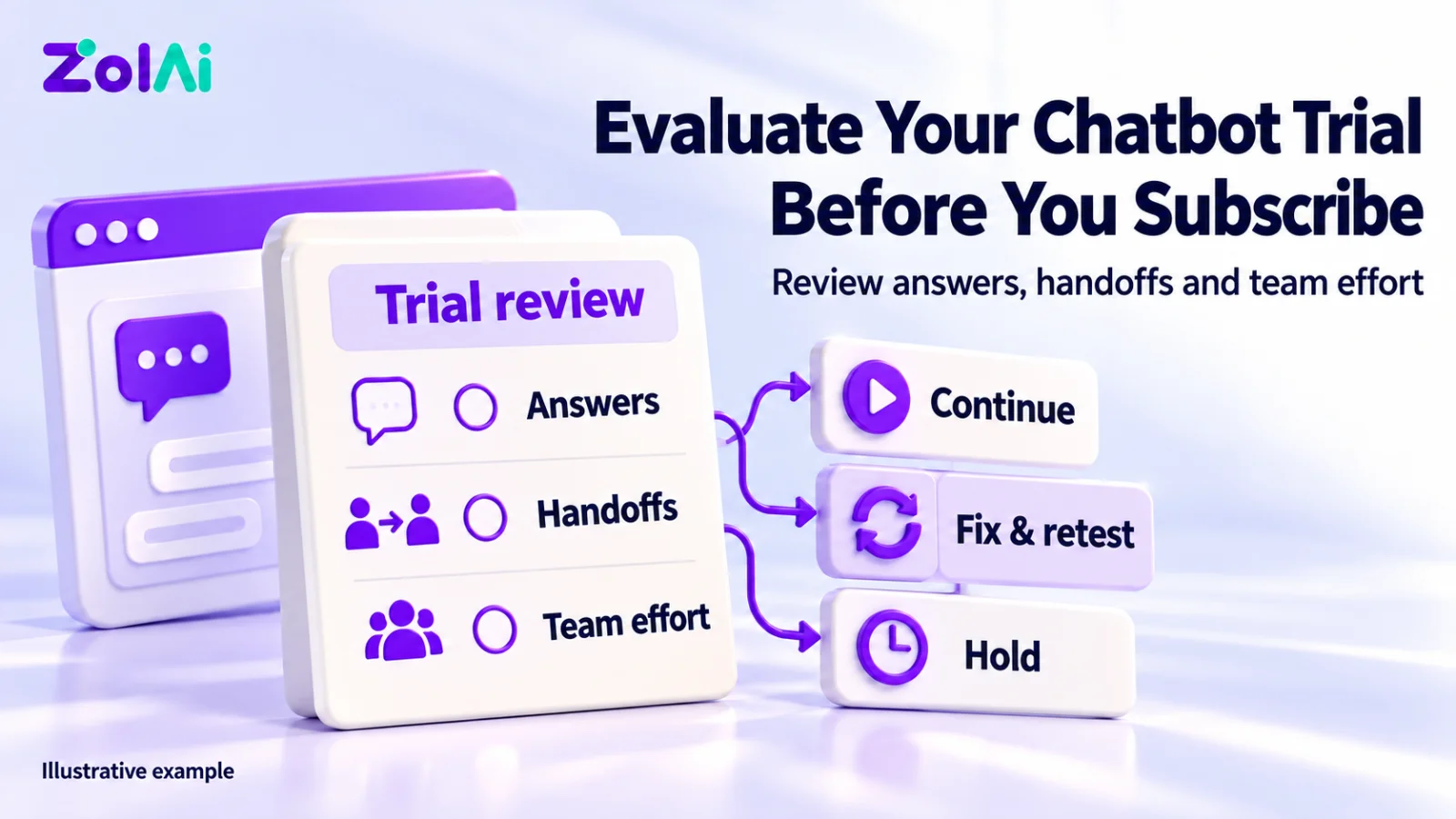
Run a limited trial when the essentials are available and you need to evaluate operation with your questions.
Request a specific demonstration when a material requirement remains unproven, such as human takeover or price updates.
Rule the tool out for this scope when an essential channel or function is unavailable.
Keep “not yet verified” separate from both a successful demonstration and a confirmed failure. Once the essentials are established, compare operating effort, cost and optional features.
When should you consider ZolAi?
ZolAi can answer website visitors in Arabic and English using your business content and files, with a team inbox and human handoff. Consider it for evaluation when the job is answering from approved information and bringing in your team when a person is needed.
For catalogue information, a manually uploaded file needs updating and re-uploading. A linked source needs to be fetched again to bring in changes. Treat this as a content-update process, rather than proof of live inventory access or order-processing capability. WhatsApp and Instagram are outside ZolAi's currently available scope, so it does not fit a requirement to use those channels now.
Try ZolAi with your own business content and customer questions. Review the answers and your team's handoff before committing.