- 4 min read
- customer support
How to Reduce Repetitive Customer Questions
Find why questions repeat, then choose clearer pages, saved replies, self-service or an AI chatbot. Use a practical sorting table and measure whether customers get help.
By Eman El-Bakry
Read this article in Arabic
Reduce repetitive customer questions by fixing the information customers cannot find, reusing approved answers, and automating only the requests with dependable answers. Keep requests needing account access, exceptions or judgement on a clear human route.
First check what “repetitive” means. Different customers asking your opening hours is a content problem. The same customer asking three times about an unresolved payment is a follow-up problem. They need different fixes.
Find the cause behind the repeated question
Review a manageable sample of recent conversations across the channels you use. Group equivalent questions together even when their wording differs. Remove personal details from any working sample shared for analysis.
For each group, ask:
Is the answer missing, difficult to find or unclear?
Does a published answer conflict with what staff say?
Is the question really a request to check a specific customer's situation?
Is the customer returning because nobody completed the previous action?
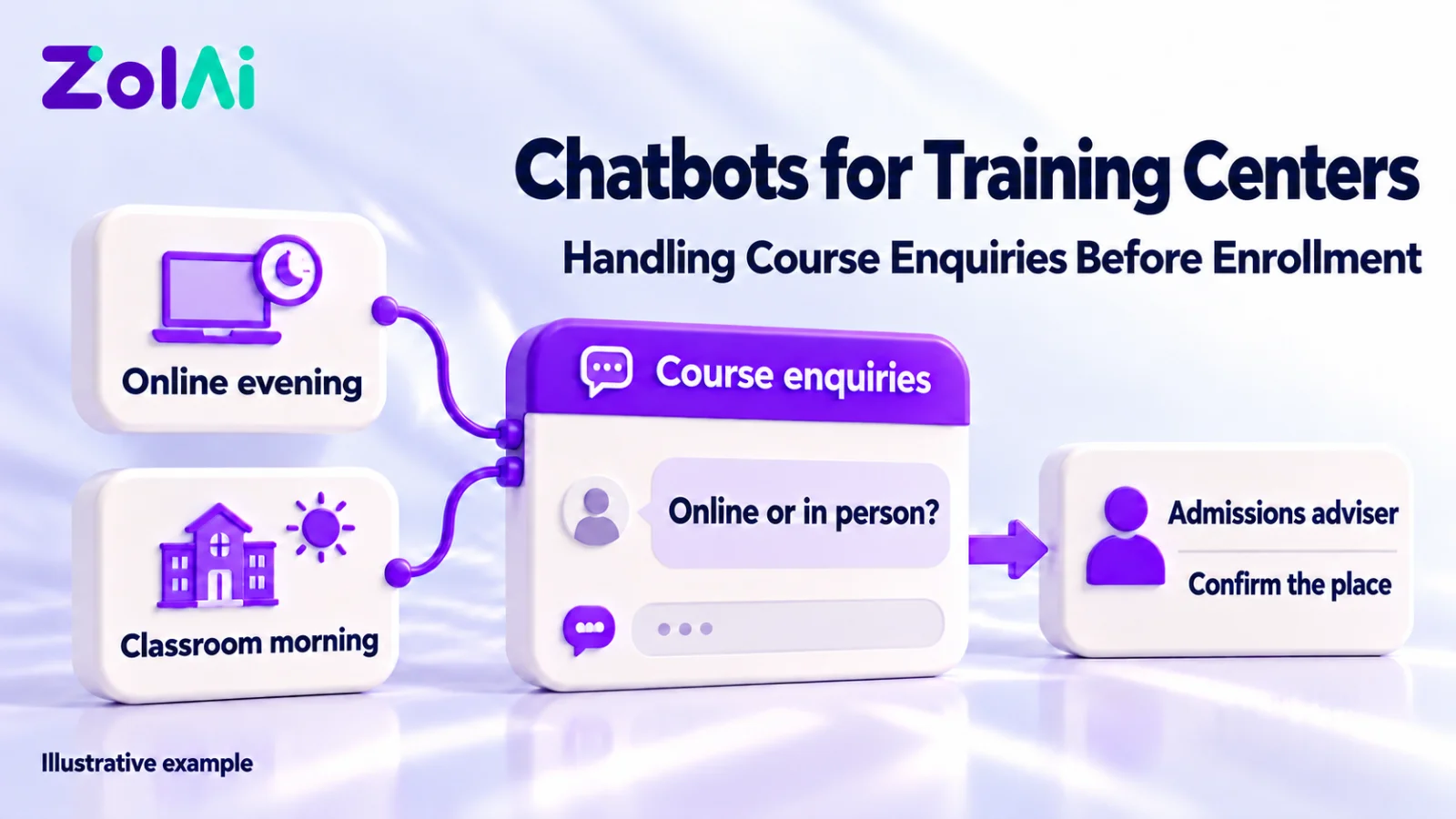
For example, frequent questions about whether training is online may justify one clear line beside the course date. A chatbot would still need that same reliable information.
Match each question to the smallest useful fix
Use this illustrative worksheet, then replace the examples with your enquiries:
Question or pattern | First fix to try | Who handles the exception? |
|---|---|---|
“Is this course online?” | State the format on the course page | Course administrator if a special arrangement is requested |
“Which delivery areas are covered?” | A visible policy, then a chatbot if visitors still need help finding it | Support for an unlisted location |
An occasional request for a document | An approved saved reply with a current link | The document owner |
“Where is my order?” | A verified order-status route or staff lookup | Someone with appropriate access |
“I've contacted you twice about this refund” | Find the existing case and assign its next action | The person authorised to resolve it |
Put answers near the point where the question arises. A detailed help center can hold longer instructions; a short explanation on the relevant page may handle the immediate uncertainty.
Keep saved replies for cases a person still needs to read and adapt. Add an owner and review date so a convenient template does not keep repeating an obsolete promise.
When an AI chatbot becomes a useful next step
Trial AI when visitors ask the same underlying questions in varied language and the answers exist in maintained business content. The useful job is helping people reach and understand those answers.
An FAQ page, a saved reply and a chatbot can coexist. Customer-service automation should have a defined task and an exit route. Microsoft describes FAQs and other tools as forms of customer self-service; choosing one does not establish that every enquiry can be resolved without staff.
Do not automate an answer merely because the question is frequent. “Can you waive this fee?” may recur daily while still requiring approval. A catalog snapshot also cannot establish a particular order's current status.
Decide how questions will move between AI and live chat, including when the team is away. If the main need is repeated human follow-up, fix ownership before adding another entry point.
Check whether the change actually helped
Choose one question group and record a baseline over a stated period. Make one focused change, then review a comparable period, noting changes in traffic, campaigns or product problems.
Count enquiries in that group, repeat contact about the same unresolved issue, incorrect answers and staff handling time if you can measure it consistently. For a rate, keep the denominator explicit: enquiries per eligible visitor, for example, differs from enquiries as a share of all support conversations.
Fewer messages alone do not prove success. Check whether visitors found a correct answer, gave up, or returned through another channel. Review a sample of outcomes and unresolved cases alongside the count.
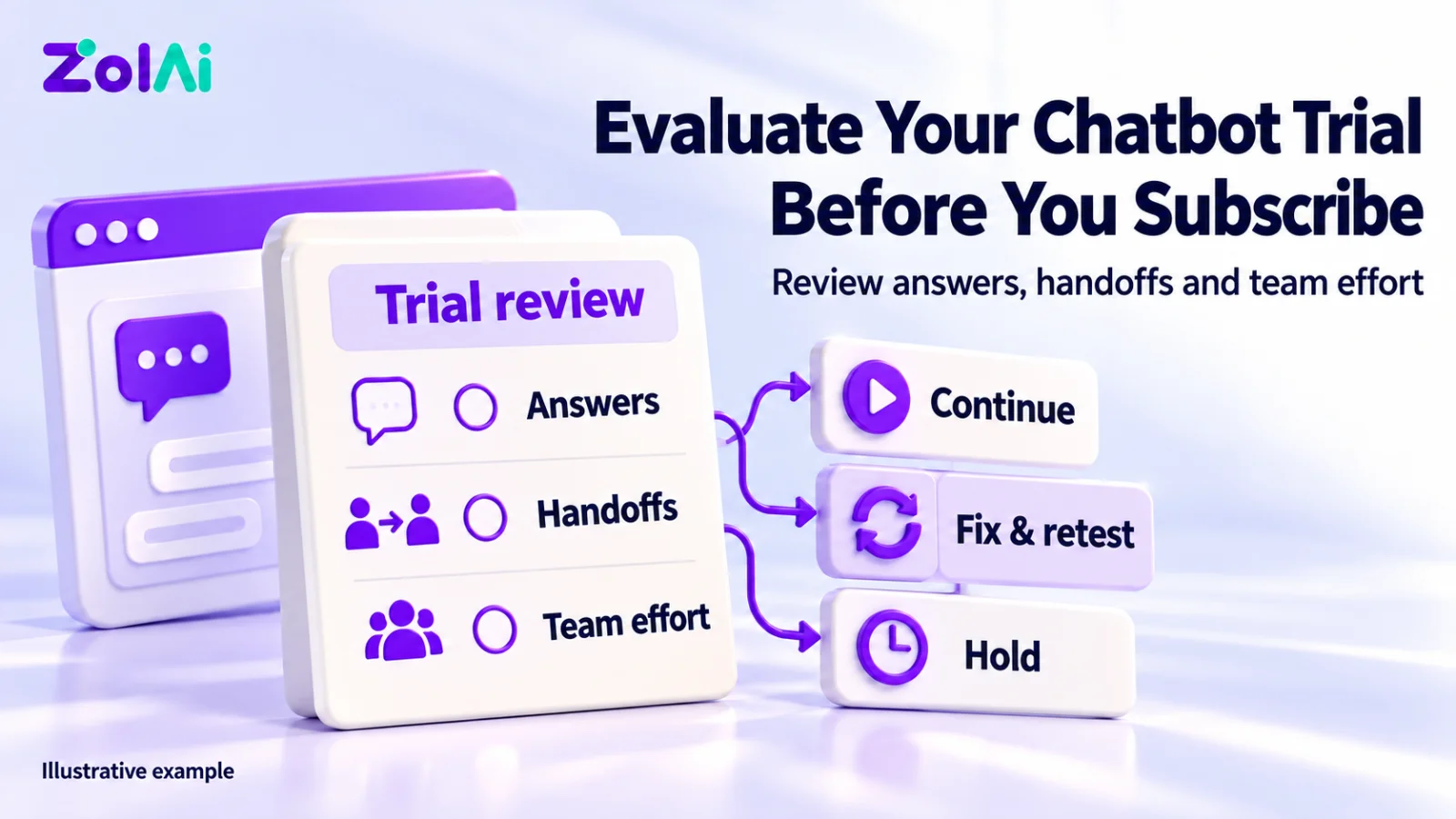
If your first group has approved answers and a person to handle exceptions, follow the guide to adding a website chatbot. Try ZolAi for 14 days without a credit card on that group, and evaluate answer quality and follow-up before expanding.