- 4 min read
- lead capture
How to Capture Website Leads Without Blocking Answers
Answer visitors' questions first, offer a useful follow-up and ask only for the details needed. Design a chat flow your team can receive, check and act on.
By Eman El-Bakry
Read this article in Arabic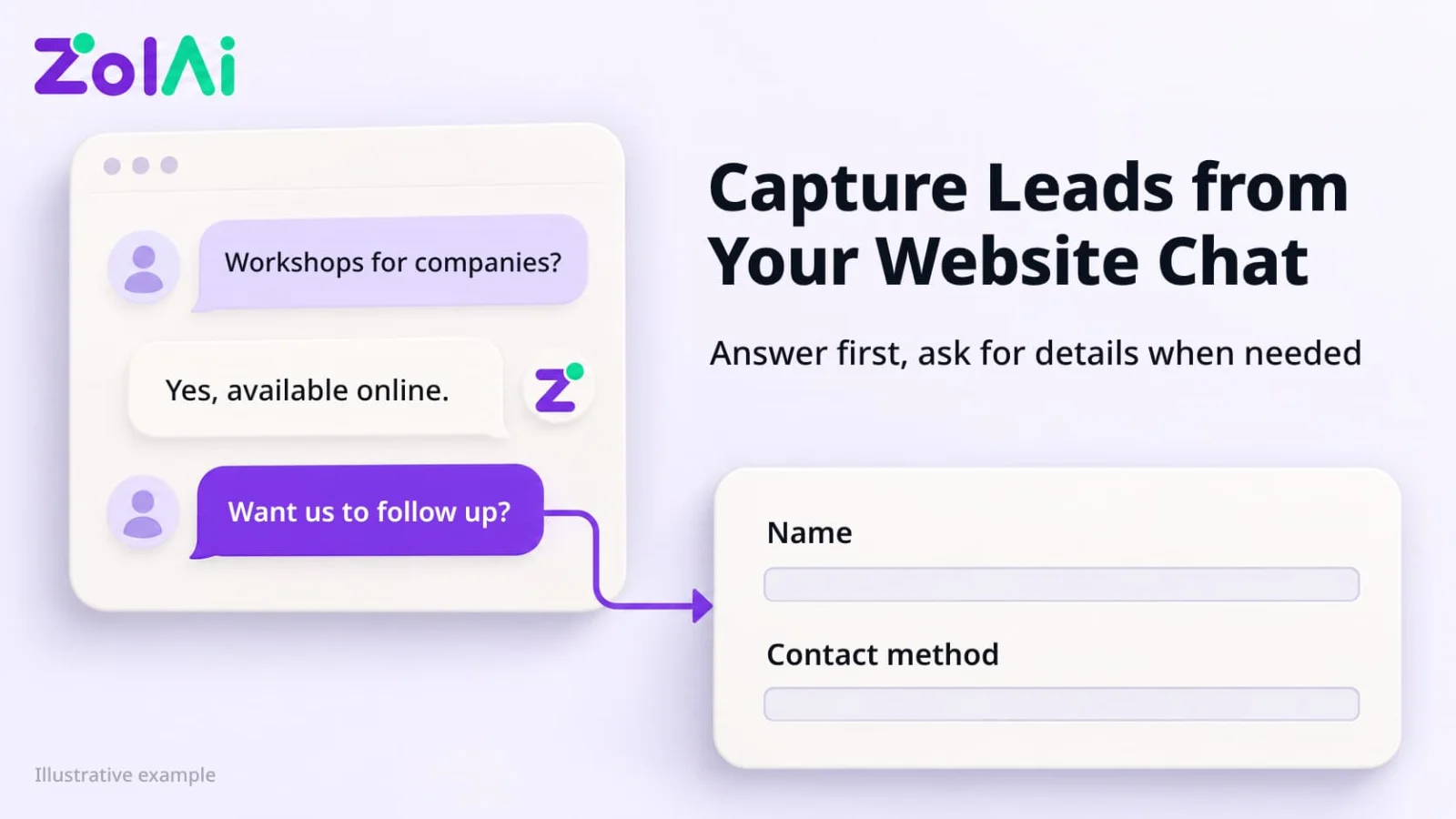
To collect useful enquiries through website chat, answer the public question first, offer a relevant next step, and request only the contact details that step needs. Keep an ordinary answer available when the visitor declines to leave details.
A general question about your service is different from a request for a tailored quote or callback. Design the data request around that difference instead of making every visitor complete an opening form.
Ask when a person can add something useful
Good moments include a visitor requesting a quote, asking for a callback, or needing information your team must confirm. Explain what will happen after they share their details and use a reply window the team can actually meet.
For example, “Would you like our team to follow up about a workshop for your staff?” connects the request to the conversation. “Enter your phone number to continue” gives no such reason when the visitor only asked for published opening hours.
In-conversation collection is a real product pattern: tawk.to's Arabic documentation describes lead forms used during a conversation. This does not mean every chatbot offers the same timing controls or fields; verify the tool you choose.
Request details for one clear next step
Lead capture needs a usable record, not simply a question asking for data. Agree what the receiving person needs before creating the flow.
Detail | Why it might be needed |
|---|---|
Name | Address the person appropriately during follow-up |
One suitable contact method | Reply through the channel agreed with the visitor |
Short description of the request | Avoid restarting the enquiry |
A task-specific fact, if necessary | Prepare the next action, such as a workshop's approximate group size |
Do not require an email and phone number just because both fields exist. Keep personal data limited to the purpose and the system's supported workflow. Leave payment credentials, passwords and unrelated identity documents out of an ordinary sales enquiry.
Collecting details for a requested answer should not silently enrol someone in unrelated marketing. Explain the follow-up and provide your applicable privacy information. These are flow-design principles; the notice and data-handling arrangements must match your actual service.
Show what a helpful exchange looks like
This is a fictional service enquiry, not a recorded ZolAi conversation:
Visitor: Do you run online workshops for companies?
Assistant: The published service includes online company workshops. A tailored programme needs the team's review. Would you like them to follow up about your group?
Visitor: Yes, for around 12 people.
Assistant: What name and contact detail should the team use for this enquiry?
The next step is saving and assigning a request the team can check. The assistant should not claim a message was delivered, a time reserved or a quote approved unless that event actually happened.
If the visitor declines, keep answering questions supported by public information. If their request cannot proceed without a way to contact them, explain that limit and offer the business's available contact route.
Check the receiving side
Agree who reviews new enquiries and who covers their absence. Check that the saved details remain attached to the relevant request and that incorrect details can be corrected through a supported process.
Test these cases before relying on the flow:
The visitor agrees and completes the requested details.
They decline or stop partway through.
They correct a contact detail already supplied.
They return with the same enquiry.
The responsible person is unavailable.
For each case, inspect what the team receives and what the visitor is told. A visible invitation to provide details is not a saved lead; a saved lead is not proof that somebody followed up.
Measure useful follow-up separately from collection
Track invitations, completed usable records and unique enquiries separately. If reporting a capture rate, define the denominator, such as visitors offered that follow-up, and use the same period. Do not count repeated submissions as new people automatically.
Qualification asks whether the enquiry fits your offer; a contact detail alone does not establish fit, budget or purchase intent. Review actual follow-up outcomes before calling records qualified opportunities or sales.
If website chat is new to your business, start with the setup guide. ZolAi supports collecting customer enquiry details alongside website support. Try one follow-up journey in ZolAi and verify what is saved and who receives it before expanding the flow.